Smiling Frog on Lily Pad Line Art: A Guide to High-Quality Digital Downloads
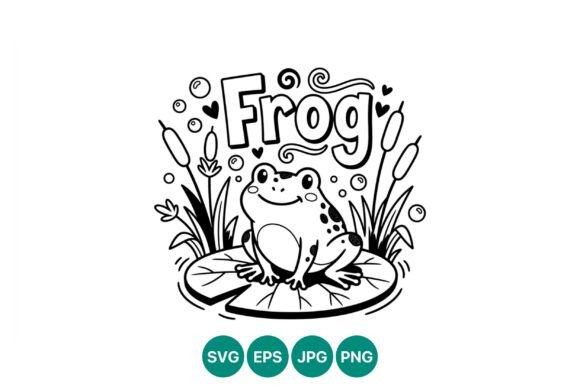
When searching for versatile digital assets, many creators overlook the subtle details that distinguish a usable file from a frustrating one. The Smiling Frog on Lily Pad Line Art is a prime example of how a simple design can serve multiple purposes, provided you understand what you are downloading. This specific artwork features a cheerful amphibian resting on a lily pad, framed by cattails and decorative swirls, with the word "frog" rendered in playful lettering. While it may appear straightforward, the technical execution behind this black and white line art determines its value for your projects.
Many beginners and even seasoned professionals make the mistake of assuming all line art files are created equal. They download a low-resolution image, attempt to scale it up for a large print, and end up with pixelated edges. Others struggle with thick, uneven lines that clog cutting machines or fail to register correctly with vinyl cutters. Understanding the components of this specific download—including the ZIP folder containing SVG, PNG, JPG, and EPS files—can save you significant time and money.
The Importance of Vector Formats in Line Art
One of the most common misunderstandings involves the difference between raster and vector files. The Smiling Frog on Lily Pad Line Art package includes both, but knowing when to use which is critical. The SVG and EPS files are vectors. This means they are built using mathematical paths rather than pixels. For a design featuring high-contrast black and white lines, vectors ensure sharp results at any size. Whether you are printing a small sticker or a large banner, the lines remain crisp.
In contrast, the PNG and JPG files included in the zip are raster images. These are useful for web previews or quick digital mockups, but they have fixed dimensions. If you try to enlarge a JPG beyond its original resolution, the quality degrades rapidly. A frequent error among hobbyists is using the JPG for physical crafts like heat transfer vinyl or laser engraving. This often leads to jagged edges and poor cuts. Always prioritize the SVG or EPS file for any project requiring precision cutting or scaling.
Avoiding Design Clutter and Usability Issues
Another area where users stumble is in the complexity of the design elements. This artwork includes decorative swirls and cattails surrounding the central figure. While these add charm, they can pose challenges if not handled correctly. Beginners often ignore the spacing between the frog, the lily pad, and the surrounding botanical elements. When using this design for die-cutting or vinyl application, insufficient spacing can cause the material to tear or the design to fall apart during weeding.
To avoid this, always preview the SVG in your cutting software before sending it to the machine. Check the node count and ensure that the playful lettering of the word "frog" is connected properly to the main body if necessary, or grouped logically. A better approach is to separate the layers in your design software. This allows you to adjust the thickness of the decorative swirls independently from the frog’s outline, ensuring balanced visual weight and structural integrity.
Color Mode and Contrast Considerations
Since this is a black and white line art style, contrast is everything. A common oversight is failing to check the color mode of the file before printing. Some downloads may inadvertently be saved in CMYK, while others are in RGB. For most home printers and digital screens, RGB is standard, but professional printing often requires CMYK. If you notice that the black lines appear gray or washed out in your final print, check your printer settings and the file properties.
High-contrast artwork relies on pure black lines against a pure white background. If you are using this Smiling Frog on Lily Pad Line Art for coloring pages, ensure that the lines are dark enough to guide the user but not so thick that they dominate the page. The 100% vector nature of the SVG and EPS files allows you to adjust stroke width easily. This flexibility is a major advantage over static PNGs, where line thickness is fixed. Adjusting the stroke can make the design more suitable for young children who need broader boundaries or for adults who prefer delicate, intricate lines.
Licensing and Commercial Use Misconceptions
Perhaps the most critical aspect to verify before using any digital asset is the license. Many creators assume that because they downloaded a file, they can use it freely for commercial products. This is rarely the case without explicit permission. Before selling items made with the Smiling Frog on Lily Pad Line Art, such as t-shirts, mugs, or printed decor, review the terms included in the ZIP folder.
Small business owners and entrepreneurs must be particularly vigilant. Using artwork without proper commercial licensing can lead to copyright strikes or legal issues. A prudent step is to keep a record of your purchase and the associated license agreement. If the license permits commercial use, clarify if there are limits on the number of units you can produce. Being proactive about these details protects your business reputation and ensures ethical practices.
Optimizing Workflow for Different Platforms
Different crafting platforms handle SVG files differently. For instance, Cricut Design Space and Silhouette Studio may interpret nodes and paths in unique ways. A mistake many users make is not ungrouping the elements upon import. The decorative swirls, cattails, frog, and text might be grouped together by default. To customize the design, such as changing the color of the lily pad while keeping the frog black, you must ungroup these elements.
Additionally, check for stray points or open paths in the vector file. Although high-quality downloads like this one are typically clean, it is good practice to inspect the file. Open the SVG in a vector editor like Adobe Illustrator or Inkscape. Look for any disconnected lines that might confuse your cutting machine. Cleaning up these minor issues beforehand ensures a smoother production process and reduces material waste.
Making the Right Choice for Your Project
When evaluating whether this specific line art fits your needs, consider the end goal. If you are creating educational materials for educators, the clear, bold lines of the frog and the readable, playful lettering make it ideal for worksheets or classroom decorations. For marketers and bloggers, the whimsical nature of the smiling frog adds a friendly touch to social media graphics or email headers, provided you use the high-resolution PNG for web optimization.
Freelancers should appreciate the versatility of having four file formats in one ZIP folder. It eliminates the need to convert files manually, which can introduce errors. By starting with the correct file type—SVG for cutting, PNG for web, EPS for professional print—you streamline your workflow. This efficiency translates to faster turnaround times and higher client satisfaction.
In summary, the Smiling Frog on Lily Pad Line Art offers a charming and functional resource for various creative endeavors. By avoiding common pitfalls related to file formats, design complexity, and licensing, you can maximize the potential of this asset. Take the time to understand the tools you are using, respect the intellectual property rights, and leverage the scalability of vector graphics. With these practices in mind, you will achieve professional-looking results that enhance your projects and delight your audience.