Bringing Warmth to Design: A Guide to Using Watercolor Cookie Clipart and Patterns
In the vast world of digital design, trends come and go with the speed of a scrolling feed. However, certain aesthetics possess a timeless quality that resonates deeply with human emotion. One such style is the cottagecore and bakery-inspired aesthetic, characterized by softness, nostalgia, and an inviting sense of home. At the heart of this visual language lies the Watercolor Cozy Cookies Clipart Bundle and the accompanying Watercolor Cookies Collection – Frames Patterns Set. This collection is not merely a set of images; it is a toolkit for creating warmth in an increasingly digital world.
For designers, small business owners, and creative hobbyists, understanding how to leverage hand-painted elements can transform ordinary projects into charming, professional-grade works. This article explores the significance of watercolor textures in modern design, breaks down the components of this specific collection, and provides practical guidance on how to integrate these sweet elements into your workflow.
The Psychology of Softness in Visual Communication
Why do we gravitate toward watercolor? Unlike the sharp, precise lines of vector graphics or the hyper-realism of 3D rendering, watercolor offers imperfection. The bleeding edges, the visible brush strokes, and the translucent layers mimic the organic nature of life. When applied to subjects like cookies, pastries, and decorative frames, this medium evokes feelings of comfort, safety, and indulgence.
In marketing and branding, this emotional connection is invaluable. A bakery using crisp, cold geometric shapes might convey efficiency, but a bakery using soft pastel tones and delicate cookie illustrations conveys care, handmade quality, and tradition. This is where the Watercolor Cozy Cookies Clipart Bundle becomes a strategic asset. It allows creators to bypass the sterile feel of corporate design and tap into a more personal, heartfelt narrative.
Understanding the Components of the Collection
To use these assets effectively, one must first understand what is included and how each element serves a different purpose. This collection is comprehensive, designed to cover various aspects of layout and decoration.
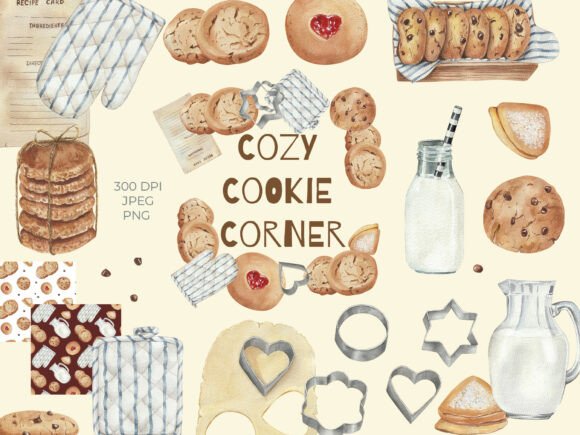
- 22 Watercolor Cookie Elements: These are the stars of the show. Provided as PNG files with transparent backgrounds at 300 DPI, they are high-resolution enough for print yet easy to layer in digital designs. The variety in shapes and icing styles ensures that no two designs look identical.
- 4 Decorative Frames: Frames provide structure. In a busy design, a watercolor frame can hold text or focal images together without feeling rigid. These frames complement the cookies, adding an elegant border to invitations or social media posts.
- 9 Seamless Patterns: Delivered in JPEG format, these repeating patterns are versatile backgrounds. They add texture and depth to packaging, fabric prints, or website headers without overwhelming the main content.
The technical specifications matter. A resolution of 300 DPI (dots per inch) is the industry standard for high-quality printing. Whether you are printing business cards or large posters, these files will remain crisp and clear, avoiding the pixelation that plagues lower-quality clipart.
Practical Applications for Creators and Businesses
The versatility of this collection means it fits into numerous industries and project types. Let us explore how different users can maximize the value of these assets.
1. Branding for Bakeries and Cafes
For small food businesses, branding is everything. Your logo, packaging, and menu design tell customers what to expect before they taste a single crumb. Using the Watercolor Cookies Collection, a cafe can create a cohesive brand identity. Imagine a coffee cup sleeve featuring one of the seamless patterns as a background, with a large, detailed watercolor cookie sticker placed over it. This combination creates a tactile, premium experience that encourages customers to share photos on social media.
2. Invitations and Greeting Cards
Personalized stationery has seen a resurgence. Whether it is a birthday invitation, a baby shower announcement, or a simple thank-you note, the hand-painted look adds a layer of sincerity. The decorative frames included in this bundle are perfect for surrounding event details. By placing the text inside a soft, watercolor border and accenting the corners with cookie illustrations, you create a balanced composition that feels both organized and whimsical.
3. Digital Content and Social Media
In the realm of Instagram and Pinterest, aesthetics drive engagement. Content creators can use the transparent PNG cookies to overlay on their photos. For example, a lifestyle blogger posting about a cozy afternoon tea can place a subtle watercolor cookie graphic in the corner of their image. This adds a thematic touch without obscuring the photograph. Furthermore, the seamless patterns can serve as branded backgrounds for quote graphics or story highlights.
Design Tips for Beginners
If you are new to working with clipart and digital assets, here are some foundational tips to ensure your designs look professional.
- Mind the Hierarchy: Do not let the clipart overpower your message. If you are designing a flyer, ensure the text is legible. Use the cookies as accents rather than the main focus unless the image itself is the subject.
- Color Harmony: The collection features soft pastel tones. When adding text or other elements, stick to a complementary color palette. Earthy browns, creamy whites, and muted pinks work well with watercolor cookies. Avoid neon or overly saturated colors that clash with the delicate nature of the art.
- Layering Techniques: Since the cookie elements have transparent backgrounds, feel free to layer them. Place a smaller cookie partially behind a larger one to create depth. You can also place elements partially outside the decorative frames to break the boundary and create a dynamic, modern look.
- Resolution Awareness: Always start with the highest resolution file available. Even if you are designing for the web, starting with 300 DPI gives you the flexibility to scale down without losing quality. Never scale up a low-resolution image, as it will become blurry.
Common Misunderstandings About Clipart
There is a lingering misconception that "clipart" implies low-quality, generic, or cheesy graphics. This stems from the early days of the internet, where limited options led to overuse of the same few images. However, modern collections like the Watercolor Cozy Cookies Clipart Bundle are essentially digital paintings. They are unique, hand-crafted, and rich in texture. Using them does not make your design look amateur; rather, it shows an appreciation for artistic detail. The key is in the curation and arrangement. When used thoughtfully, these elements elevate the design rather than detract from it.
The Role of Texture in Modern Digital Design
We live in a high-definition, screen-dominated era. Everything is smooth, glossy, and perfect. This can sometimes feel cold or impersonal. Introducing texture through watercolor brushes brings a human touch back into digital spaces. It reminds the viewer that a person created this, not just an algorithm. This "human element" is crucial for building trust and connection, especially in small business contexts.
Moreover, the trend toward cottagecore and slow living reflects a broader cultural desire for simplicity and comfort. Designs that incorporate these themes resonate because they offer a visual escape. A website selling handmade goods, for instance, benefits immensely from a background pattern that looks like hand-painted paper or fabric. It aligns the visual experience with the product's ethos.
Conclusion: Adding Sweetness to Your Creative Toolkit
The Watercolor Cozy Cookies Clipart Bundle and Watercolor Cookies Collection – Frames Patterns Set are more than just digital downloads; they are resources for storytelling. Whether you are designing packaging for a new line of artisanal treats, creating invitations for a family gathering, or simply adding charm to your digital journal, these tools provide the necessary ingredients for success.
By understanding the technical aspects—such as DPI and file formats—and applying design principles like hierarchy and color harmony, you can create works that are both beautiful and effective. Embrace the imperfections of the watercolor style, let the soft pastel tones guide your mood, and allow the cozy aesthetic to infuse your projects with warmth. In a world that often feels rushed and digital, there is profound value in creating something that feels hand-made, sweet, and sincerely inviting.
Ready to start your next project? Explore the possibilities of combining these watercolor elements with your own creative vision. The result will be designs that not only look good but also feel good to those who see them.